Shillelagh · Old Wicklow
Shillelagh and the old oak woods
A day in south-west Wicklow, from Shillelagh’s name and its old oak woods to Tomnafinnoge Wood and the Wicklow Way towards Clonegal.
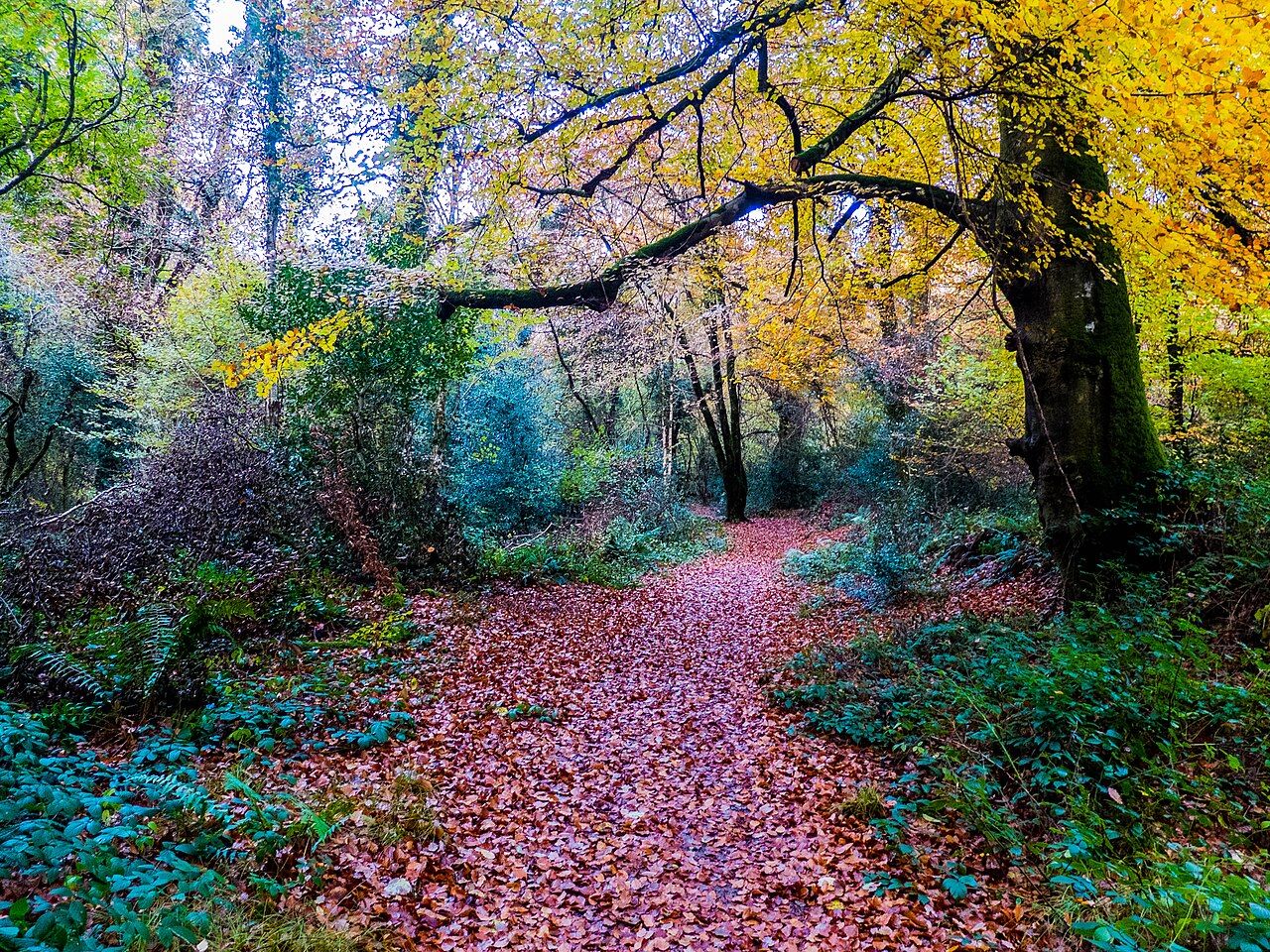
“Great oak forests.”
Shillelagh
Morning belongs to the name first. Shillelagh is a village in south-west Wicklow, near the Wexford and Carlow borders, and the name travels further than the village itself. A shillelagh is the traditional Irish walking stick and club, named after this place and its woods. I like a place that carries its own explanation, though a walking stick has the advantage of being easier to take away than a forest.
The district was once covered by great oak forests. That sentence changes how I read the place: not as a village beside some trees, but as a name rooted in a much larger wood. I would let the morning stay with that older scale, and resist turning every name into a checklist. My bad knee is entirely in favour of a slow start, particularly when the alternative might involve a descent.
Turn to Why Wicklow is called the Garden of Ireland
Midday, I would give to Tomnafinnoge Wood, near Shillelagh. It is one of the last remnants of the old oak forest, which is enough to make it the centre of this itinerary. A remnant has a particular weight: it points both to what remains and to what used to cover the district. I find that more compelling than a grand claim about scenery. The oak does not need me to decorate it with adjectives; its history has already done the work.
There is also a local tradition that Shillelagh oak was used in the roof of Westminster Hall in London. I would keep that story in its proper form, as a tradition, and enjoy the distance it opens between these woods and that roof. The village name becomes a walking stick, the woods become a building’s material, and a small place gathers a long reach without needing to boast.
Late afternoon can turn towards the hills nearby, where the Wicklow Way passes through on its way towards Clonegal. I like the idea of ending with that line across the high ground, rather than insisting the day explain every part of the district. The route gives the afternoon a direction; the village and its woods give the direction a reason. My knee, hearing “hills,” would prefer this to remain an itinerary on paper, but it has never been known for its literary judgement.
Shillelagh makes a strong day from a name, an old forest and what remains of it. I would leave the grander claim to the local tradition, and keep the oak woods at the heart of the visit.
I like a place whose name still points back to its woods.