Blessington · West Wicklow
The Blessington lakes
A valley became Poulaphouca in the 1940s; its shore holds a changed landscape beside a greenway, sailing and fishing.
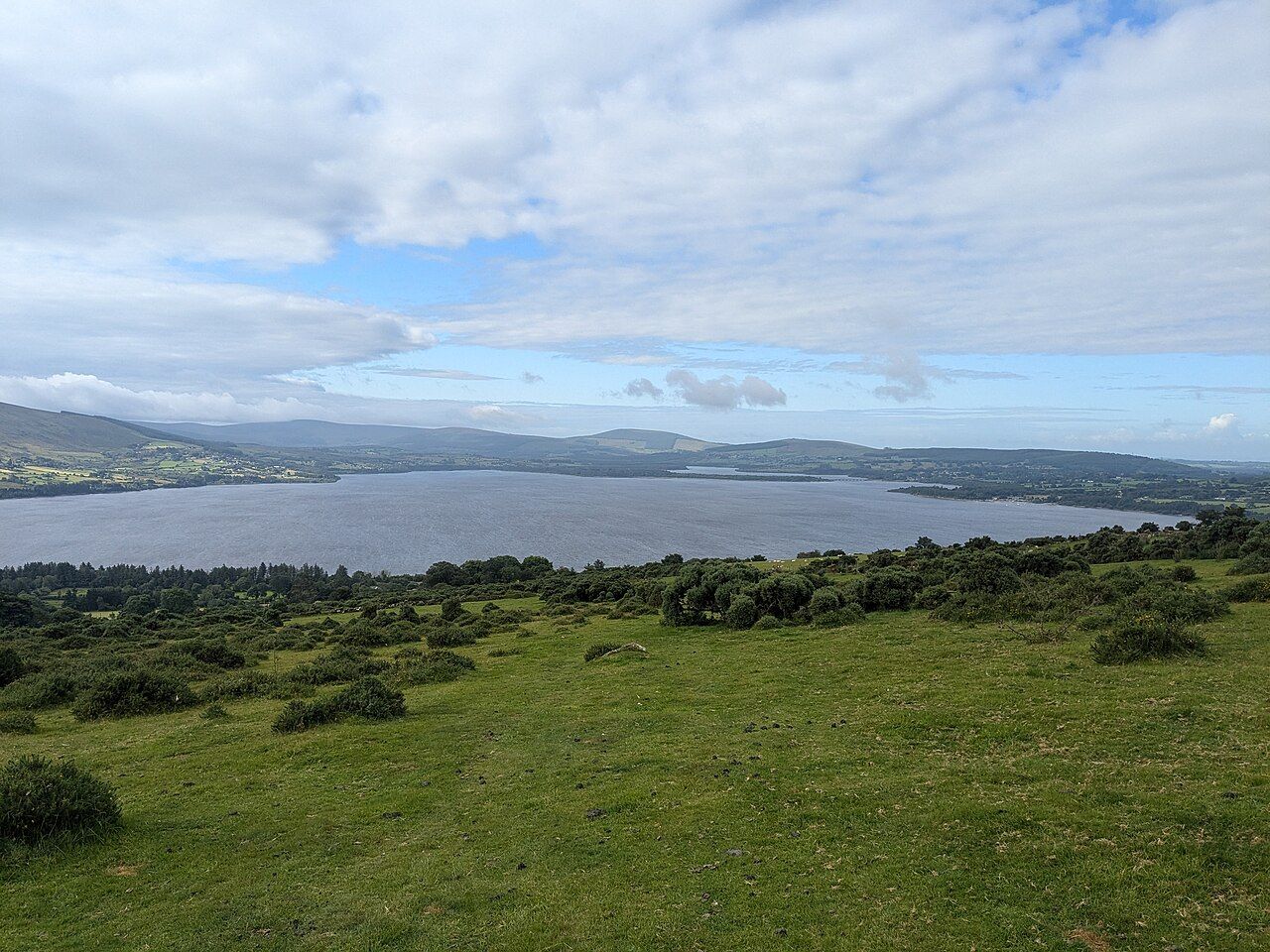
Blessington
In the 1940s, a dam was built on the Liffey for a hydroelectric scheme, and the reservoir called Poulaphouca was made in west Wicklow. The flooding covered farms, roads and houses in the valley. The reservoir now supplies drinking water to Dublin. I find that history difficult to push into the background.
At Blessington, I find the scale of the change easier to hold in mind as landscape than as a sentence. A shore can look like a neat boundary around water, but here it marks a valley reshaped by a dam, with farms, roads and houses among what the flooding covered. I like the directness of that fact; the water is useful, and the loss belongs in the same view. That is why I resist calling the reservoir a blank surface; even a walk beside it carries a history larger than the path.
I like the phrase Hollywood the original one for its unexpected ease, but Poulaphouca is harder to separate from its history. It is a reservoir, not simply a stretch of water with a name; the valley beneath it is part of what gives the place its weight for me.
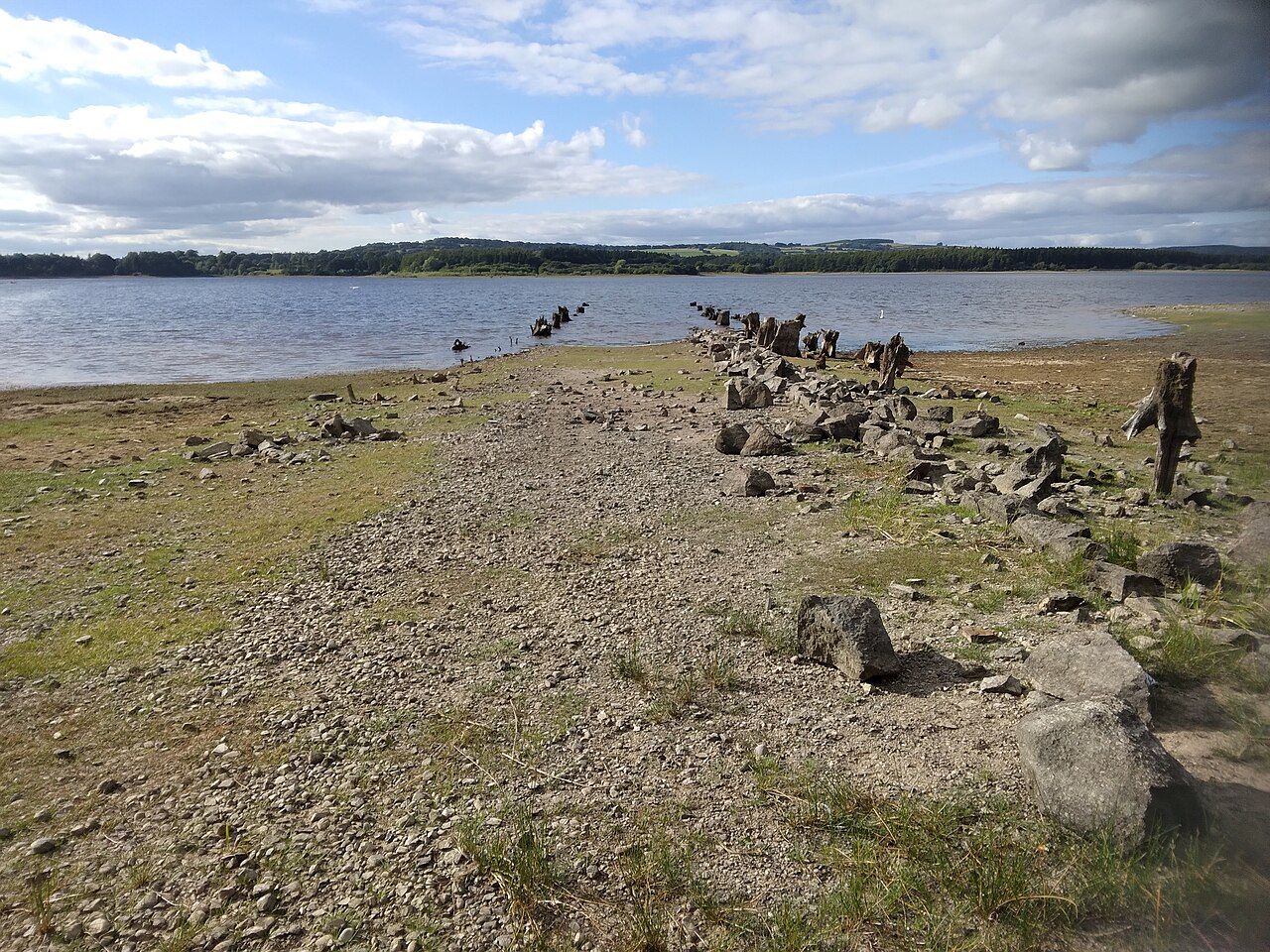
A greenway path runs along part of the shore from Blessington, and I would choose that line over treating the reservoir as a view to be taken in all at once. The path keeps attention close to the edge between water and land; the lakes are also used for sailing and fishing, practical lives continuing on a landscape made by engineering. I like that the shoreline offers a way through the story without pretending to explain it.
Turn to Poulaphouca, the hole of the púca
The reservoir's purpose reaches beyond the shore: it supplies drinking water to Dublin, while the story at Blessington remains rooted in the flooded valley. I cannot make those facts cancel each other. Perhaps the place asks for both kinds of attention, to what the water gives and to what it covers. Can I hold them together without making either one smaller?