Glendalough · Glendalough
The round tower at Glendalough
I start with the tower’s height, then its raised door and rebuilt cap; its practical purpose is still legible in the shape of the place.
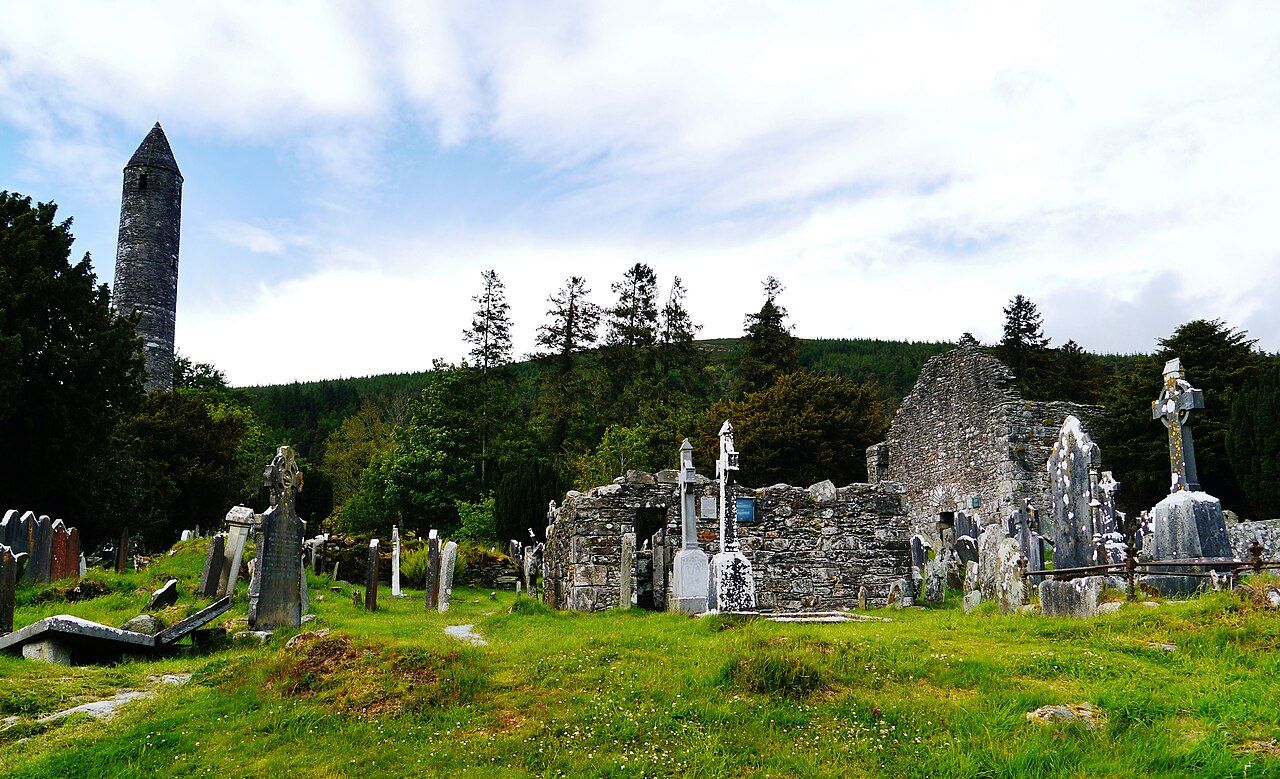
“About 30 metres high”
Glendalough
Begin with the height. I look at the round tower as part of the monastic city, not as a shape floating free of its purpose. About 30 metres high and almost complete, it has enough of its original outline to make the design easy to read, even before I start asking what each part was for.
Then take in the whole form. A round tower is a bell tower, and that first explanation gives its height a clear job. I like this kind of answer: practical, direct, and still large enough to leave room for another question. The bell-tower role is already a good place to begin.
Turn to Kevin, the hermit and the blackbird
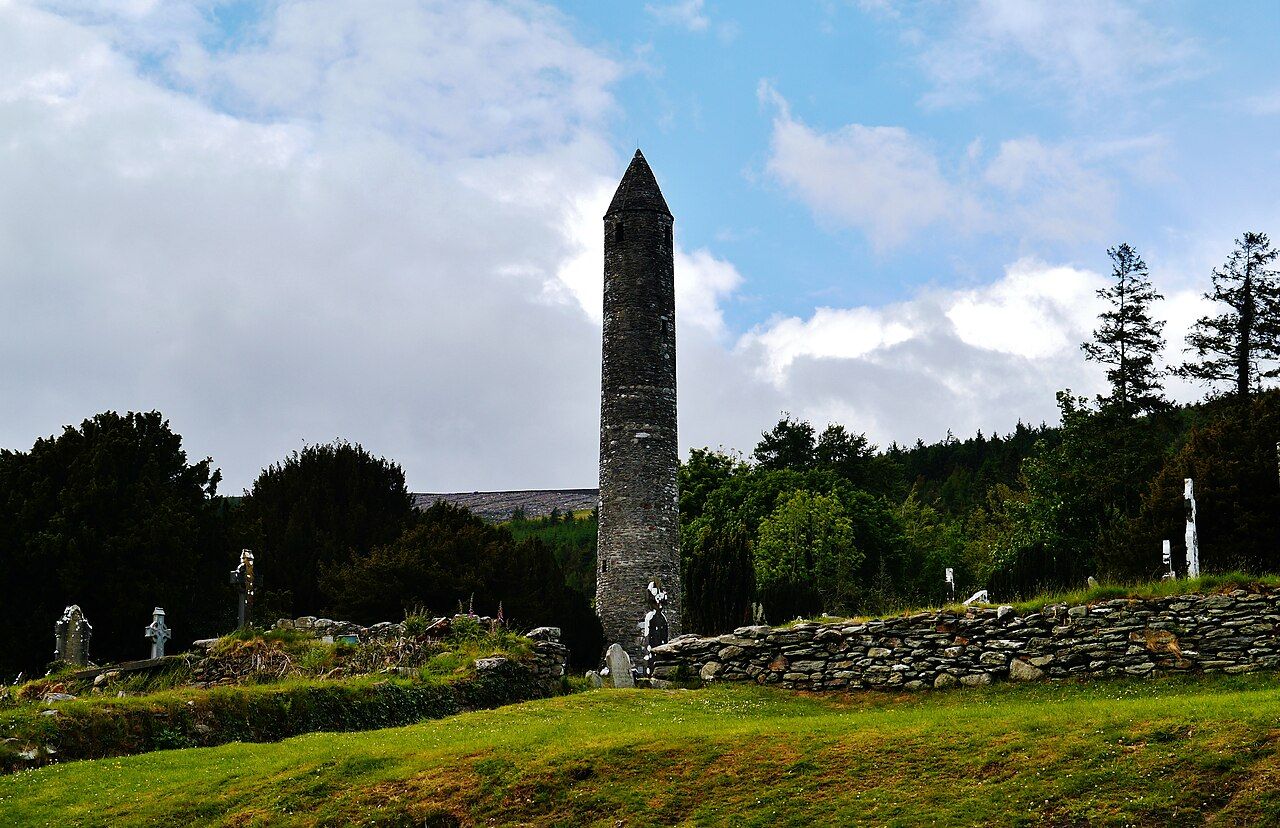
Notice the door. It is set several metres above the ground, a detail that changes the way I read the building. The high entrance made the tower hard to enter, which sounds less like decoration than a useful defence. I have a bad knee on descents, so I appreciate a structure whose most practical feature is not an invitation to climb down.
Consider what else it may have held. Round towers may also have stored valuables, though that purpose is less certain than their use as bell towers. I prefer the honest difference between the two claims: one is clear, the other possible. A high door would have made entry difficult, and that fact gives the storage idea a sensible place without turning possibility into certainty.
Look at the cap. The conical top was rebuilt in 1876 using the original stones. That is a compact piece of the tower’s story: a rebuilt cap, made from the stones that belonged to it. I find the detail more interesting than a simple label of old or new, since the tower holds both in the same outline.
Put this tower among its kin. About 65 round towers survive in Ireland in some form, and most were built between the tenth and twelfth centuries. I can leave Wicklow Head for another story; here, the useful question is how much purpose can be read from a raised door and a shape that remains almost complete.
Finish with the simplest account. The tower was a bell tower, may also have stored valuables, and was made harder to enter by its high door. Those facts are enough to keep me looking; the rest can wait. What other use might the height have suggested?