Glendalough · Glendalough
The monastic city at Glendalough
A day shaped by the gateway, round tower and churches, with St Kevin’s foundation beneath the surviving remains of the monastic city.
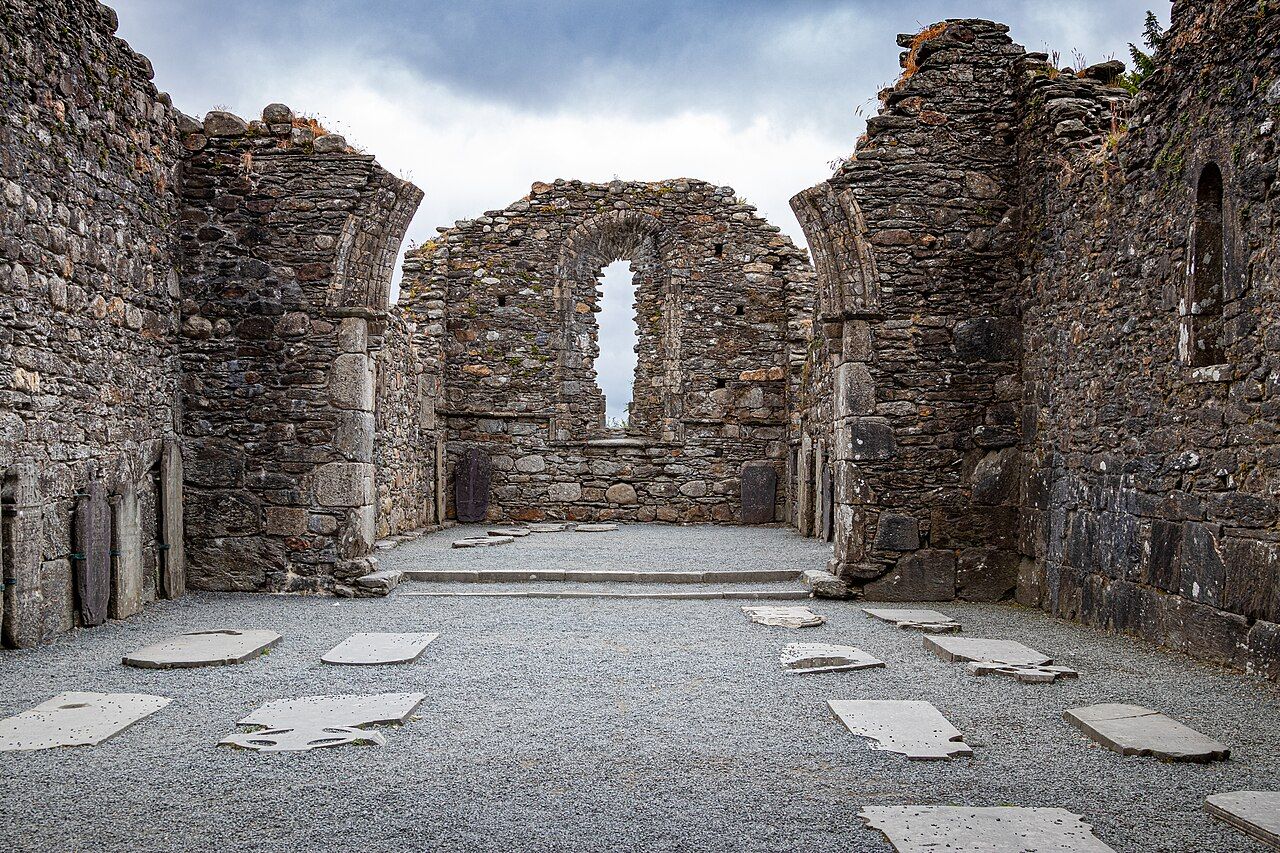
Sixth century: St Kevin founded a monastery in Glendalough, and that fact gives the remains a depth I cannot get from names alone. The valley of the two lakes is a glacial valley in the Wicklow Mountains; I like beginning with its shape, before the buildings gather the eye. The monastery grew into an important centre of learning and pilgrimage in the early Middle Ages, so I think of the surviving city as more than a collection of old structures.
Morning belongs to the gateway. It is the only one of its kind surviving in Ireland, a distinction that asks for a pause rather than a hurried glance. I like that the entry itself is part of what remains; it makes the idea of a monastic city feel less abstract. The stones do not need embellishment from me, and I am happy to let the fact carry the weight.
From there, I would give the round tower its own part of the morning. It stands among the monastery’s remains alongside the cathedral, St Kevin’s Church and several smaller churches. I find the list more compelling when I take it slowly: a tower, a cathedral, a church bearing the founder’s name, then the smaller churches, each one keeping its place in the larger story. My bad knee prefers a patient itinerary to a dramatic descent, and here patience suits the subject.
the miners' village at the head of the valleyMidday is a useful point to look outward again. Glendalough is the valley of the two lakes, and the wider shape of the glacial valley steadies my attention after the close company of the buildings. The monastery’s history is large, but the remains are particular: a gateway, a tower, a cathedral and churches. I prefer this scale of looking, where the names stay distinct instead of dissolving into one grand impression.
Late afternoon can belong to the smaller churches. I would not rank them below the tower or cathedral simply because they are smaller; the city’s character comes from the pieces together. The name the Glen of Imaal can wait for another page, while I keep my attention here. The remains are enough to hold a day without asking me to pretend I can reconstruct everything that has gone.
Turn to Kevin, the hermit and the blackbird
Near the lower lake, the visitor centre is run by the state heritage service. I would leave that practical fact until the end of the day’s outline, after the monastery itself has taken precedence. The surviving buildings make a clear impression without any claim that they tell the whole story; I come away most interested in the way the gateway and churches make a city legible through fragments.
How much of a city can its surviving parts still make visible?