Glendalough · Glendalough
The miners’ village at the head of Glendalough
A short sequence for reading the miners’ village at the head of Glendalough, from the north-shore track to the grey spoil heaps and the work done on site.
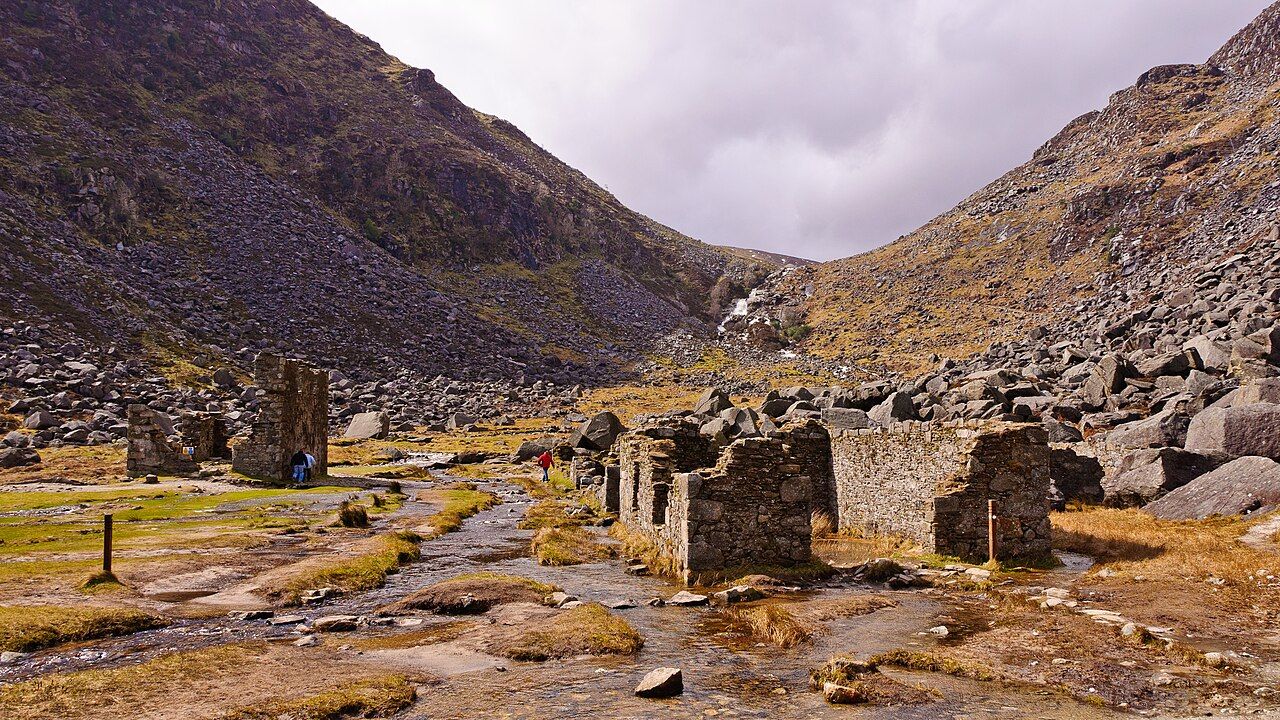
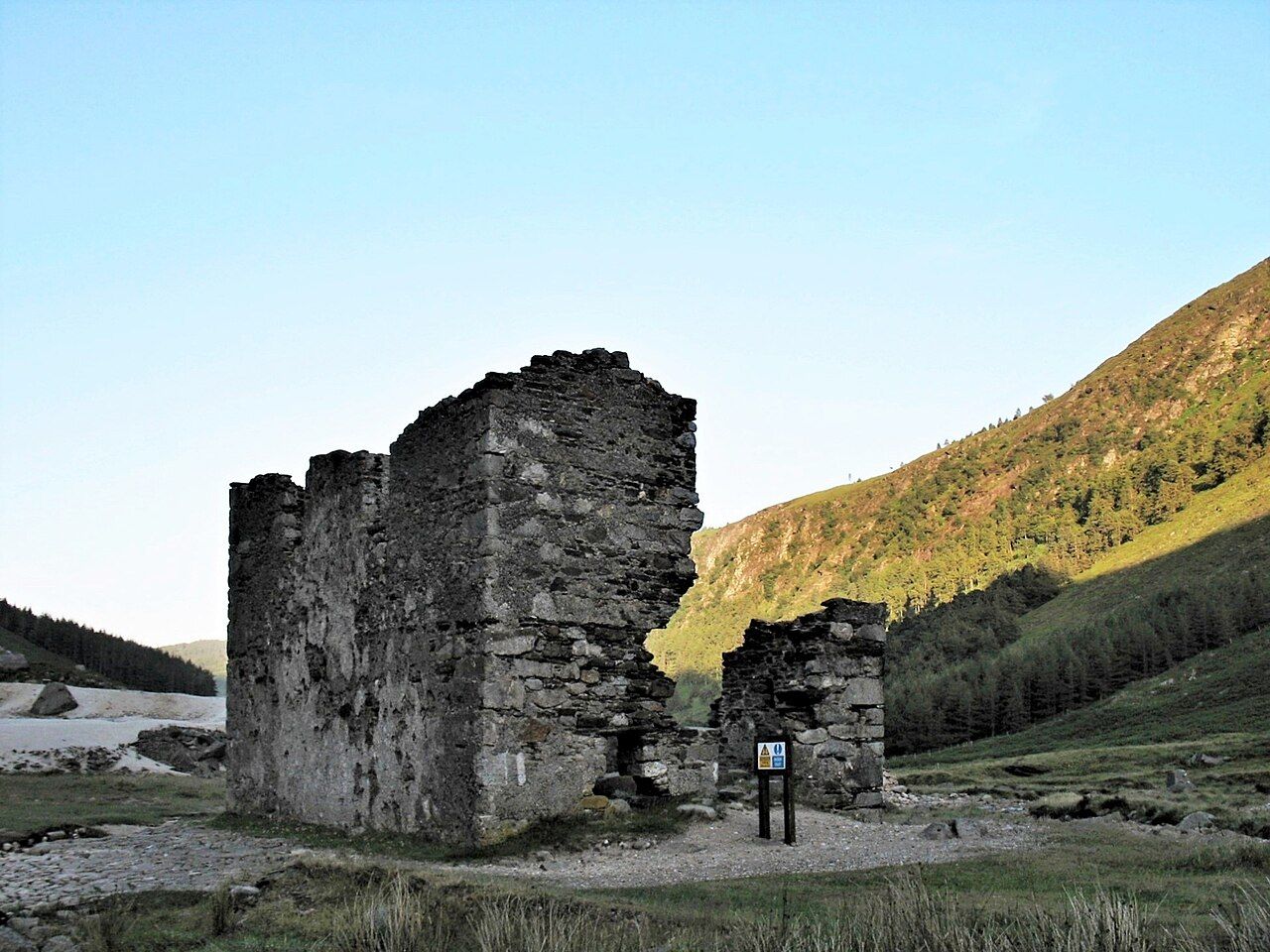
“At the head of Glendalough are the ruins of a nineteenth-century miners’ village.”
Glendalough
Begin with the track itself: it runs along the north shore of the Upper Lake, leading to the village at the head of Glendalough. I like this approach because the destination stays tied to the valley, rather than arriving as an isolated collection of ruins. Treat the north shore as part of the account, not merely the way in: the route and the village belong together in this version of Glendalough. I would keep that line in mind as the walk proceeds.
Keep the two valleys in mind as you go. Lead was mined in Glendalough and in nearby Glendasan, so the village belongs to a wider mining history, even though these particular ruins stand at the head of Glendalough. The nearby valley matters because it prevents the mines from seeming like a single isolated site. Keep both names in the story, but let the ruins here remain the focus of this visit.
At the village, give the grey spoil heaps their own attention. They still lie around the ruins, and I find them more telling than any attempt to make the place look tidy; the landscape keeps the evidence close.
Turn to The round tower at Glendalough
Then consider what happened to the ore on site: it was crushed and washed there. That detail changes how I read the remains; this was not simply a place where lead was found, but a place where work continued through several stages. For me, this is the useful order of looking: location, the heaps, then the processing. It gives the surviving remains a plain explanation without asking them to stand in for every detail of mining.
Set that work against its span. Mining went on through the nineteenth century and ended in the 1950s, a long stretch of time compressed into ruins and grey heaps that still sit around the village. I would not flatten that duration into a single period: the nineteenth-century village and the end of mining in the 1950s are both part of the account.
Take the history back across the valley to Glendasan before turning to the walk out. Lead connects the two places, while the track here keeps this visit specific: north shore, Upper Lake, village. Even the phrase the greenway by the water sounds gentler than this history of lead, crushed and washed on site.
I like the bluntness of the place: a working village, grey heaps, and no need to soften the story.