Glendalough · Glendalough
The Upper Lake and St Kevin’s Bed
A level path leads to Glendalough’s larger lake, where steep cliffs, a small cave and two churches give the shore its particular character.
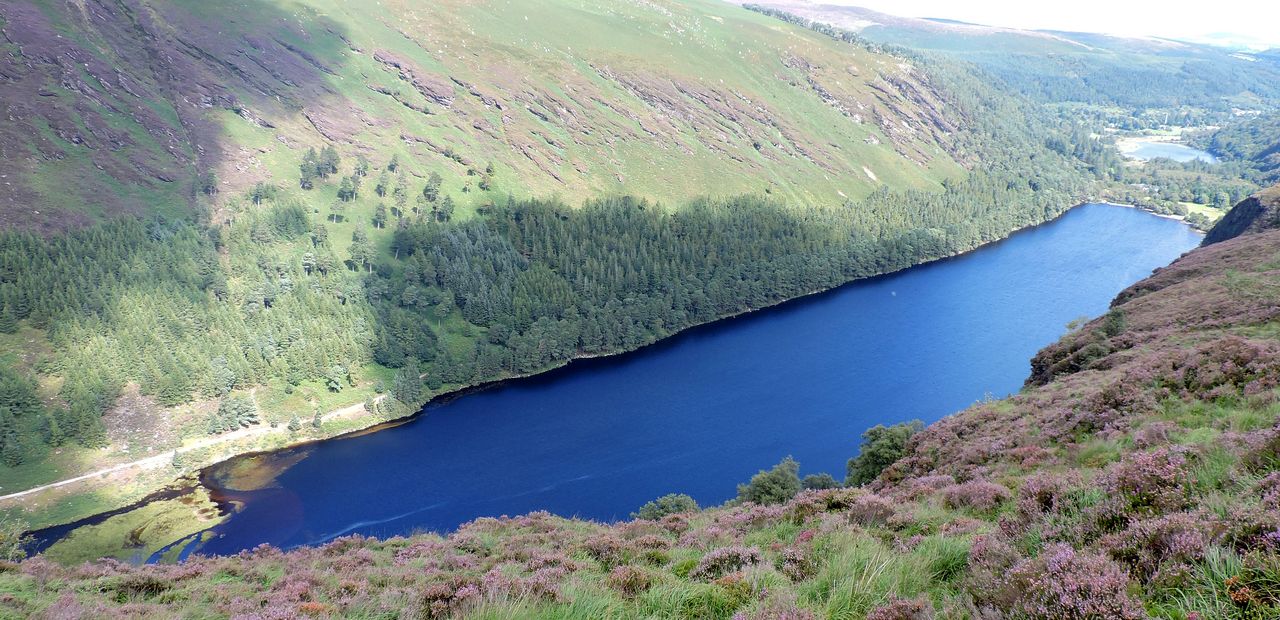
About 10 metres above the water, St Kevin’s Bed is a small cave in the cliff; I like how little is needed to give a place such weight. I would begin by letting that small measure do its work, rather than treating the cave as a destination detached from the lake below.
Kevin is said to have lived there as a hermit, which gives the cave a human scale without making the cliff feel like scenery arranged around a story. I find that balance more interesting than any grand account of the place.
Start at the visitor centre and follow the level path along the Green Road to the Upper Lake. It is a direct instruction, and I appreciate a route that does not ask for extra explanation. The path itself sets the pace: level, plain, and easy to keep in mind while the lake comes into view.
Take in the lake as a whole before picking out its details: it is the larger of Glendalough’s two lakes, set beneath steep cliffs. That pairing is the part I like best, water held close by rock. I would stay with that shape for a moment before turning to the smaller details along the shore.
Then bring St Kevin’s Bed into view as a small cave in the cliff above the lake. Its position matters: about 10 metres above the water, it is neither quite shore nor quite summit.
The cave is the story’s centre, though I would not ask it to explain the whole landscape. I like a place better when the account stays modest, and “is said to have lived there” leaves room for the rock itself.
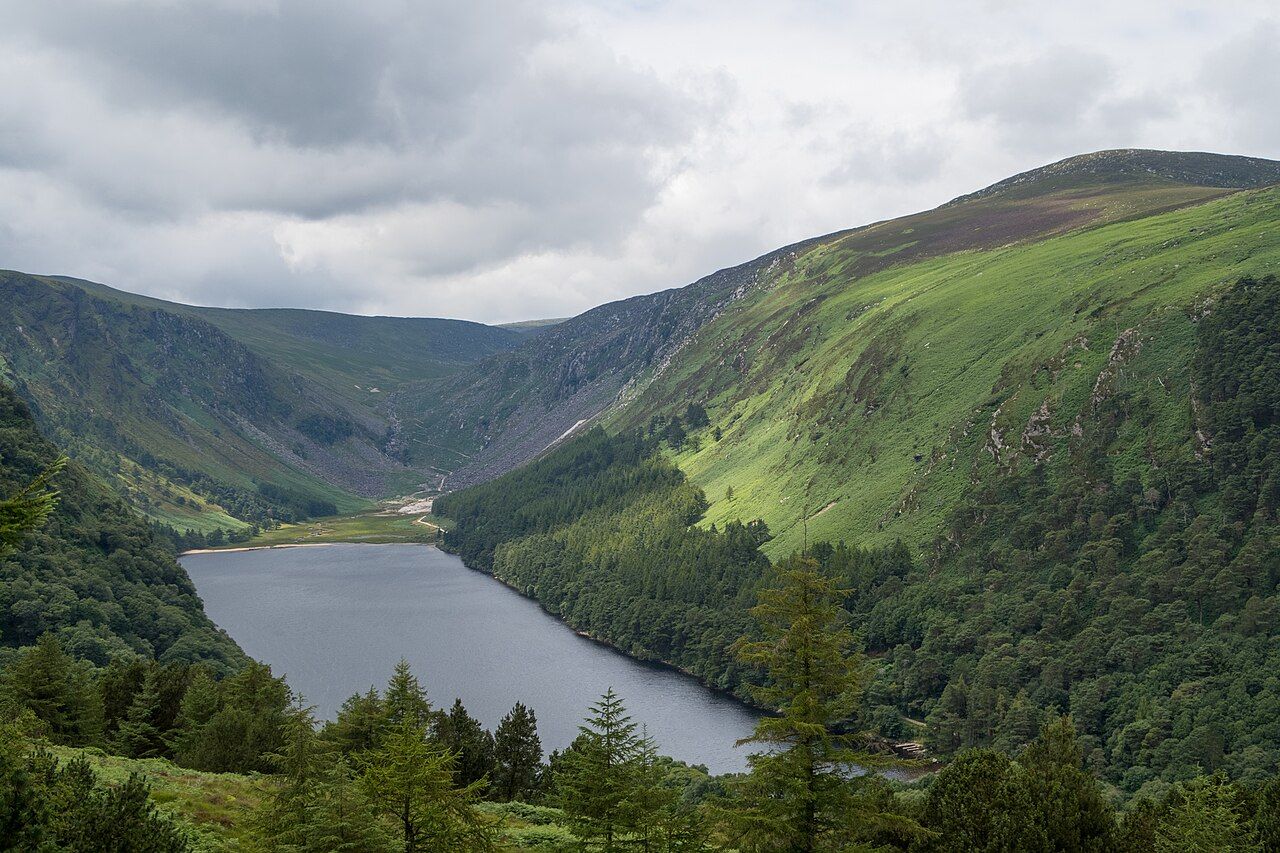
“I like a place better when the account stays modest, and “is said to have lived there” leaves room for the rock itself.”
Near the lake shore is Reefert Church, a burial place of the O’Toole chiefs. Keep that fact beside the view of the water; it gives this stretch of shore a different kind of presence. I like having the church in the sequence, not as an explanation for the lake, but as another detail to notice.
Temple-na-Skellig is a small church on a ledge on the south shore, reached only by boat. That limit belongs in the description, not as a puzzle to solve; I leave it where the shore places it.
The route remains refreshingly plain: the level path runs from the visitor centre along the Green Road to the Upper Lake. I leave the round tower for another story, and keep my attention here on the cave, cliffs and shore.
For a separate line of thought, Kippure and the source of the Liffey can wait; this sequence stays with the lake and the places named beside it. I prefer this short list of details to a fuller itinerary, since each one belongs to the same stretch of water.
Turn to St Kevin’s Way over the Wicklow Gap
I like the Upper Lake best for the way its cliff and cave make looking feel sufficient.