Glenmalure · The high ground
Glenmalure, the long glen
A long, straight glacial valley, a defeat in 1580, the Avonbeg running down its length, and paths leading to Lugnaquilla.
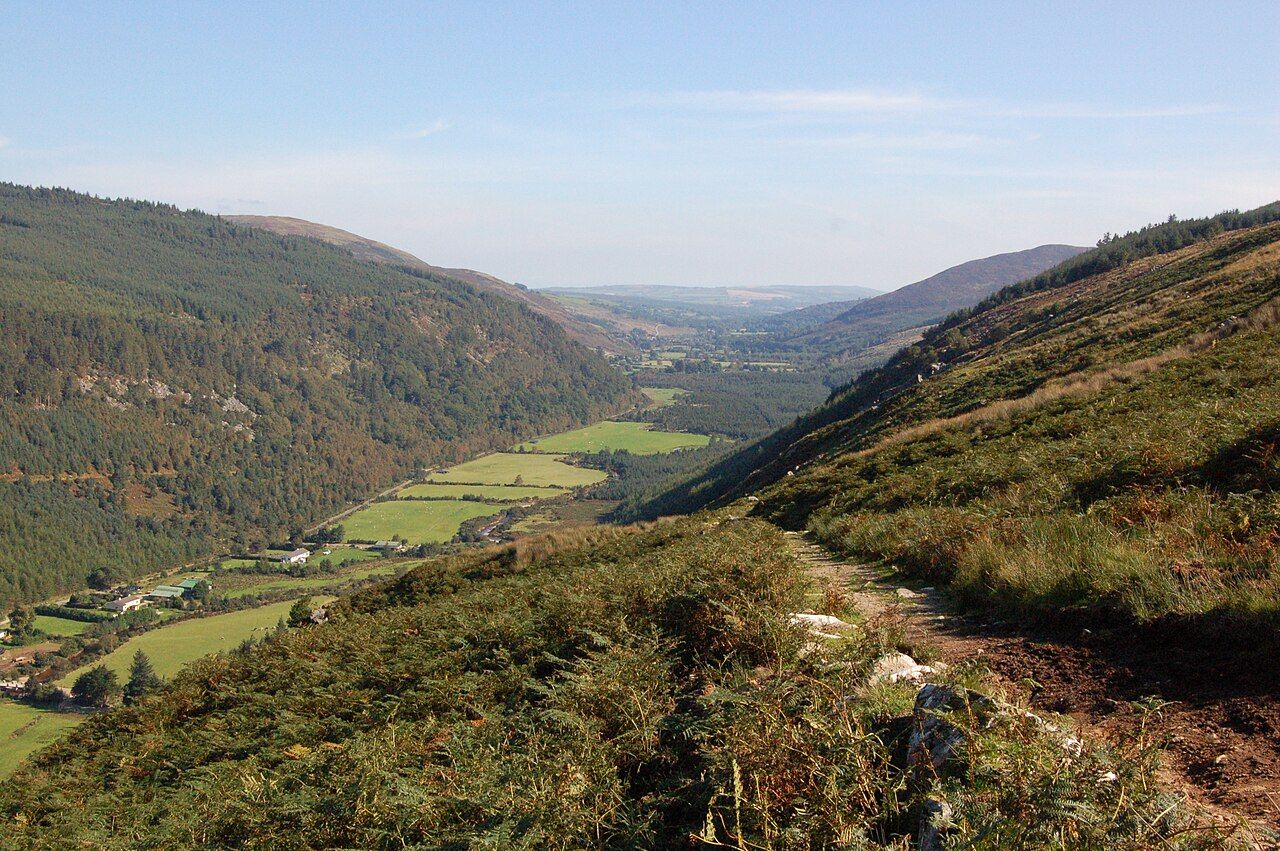
1580: Fiach McHugh O'Byrne defeated an English army in the Battle of Glenmalure. I like that this long valley holds both a clear shape in the land and a history that needs no embellishment.
Glenmalure is a long, straight glacial valley in the middle of the Wicklow Mountains, and its length is the first thing I would keep in view. The deepest glacial valley in Wicklow does not need a complicated introduction.
The Avonbeg runs down the valley.
The Battle of Glenmalure belongs to the place in a way that makes the name feel weightier than a mark on a map. In 1580, Fiach McHugh O'Byrne defeated an English army here; I would rather sit with that fact than invent a grander summary.
My favourite thing about Glenmalure is its directness. The valley is long, straight and deep; even my bad knee appreciates a landscape that does not ask for extra interpretation, though it remains less impressed by descents.
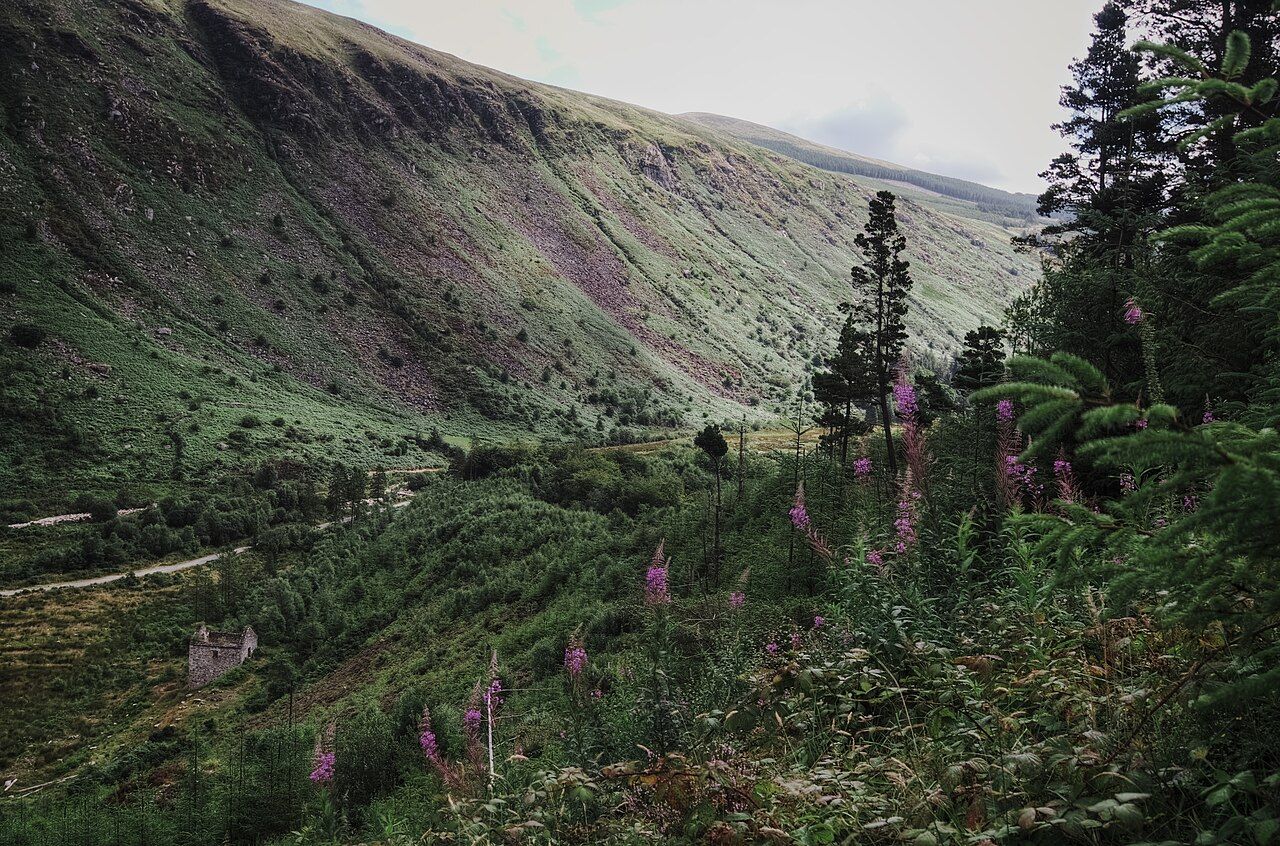
The barracks at Drumgoff, on the Military Road, were built after 1798. I like the plainness of that date beside the older story: one detail set down carefully, without pretending the valley can be reduced to either one.
A road runs up the glen to a car park near its head. That practical line gives the valley an ending point, at least for the road; I prefer the sense of length that remains beyond it.
Turn to The Wicklow Way, in three parts of a day
Paths lead from the glen to Lugnaquilla, another reason I would not hurry through this place. The sits beside a valley whose strongest impression, for me, is how clearly it keeps its own shape.
Glenmalure is at its best when I let the long line of it do the talking.