Wicklow Mountains · Old Wicklow
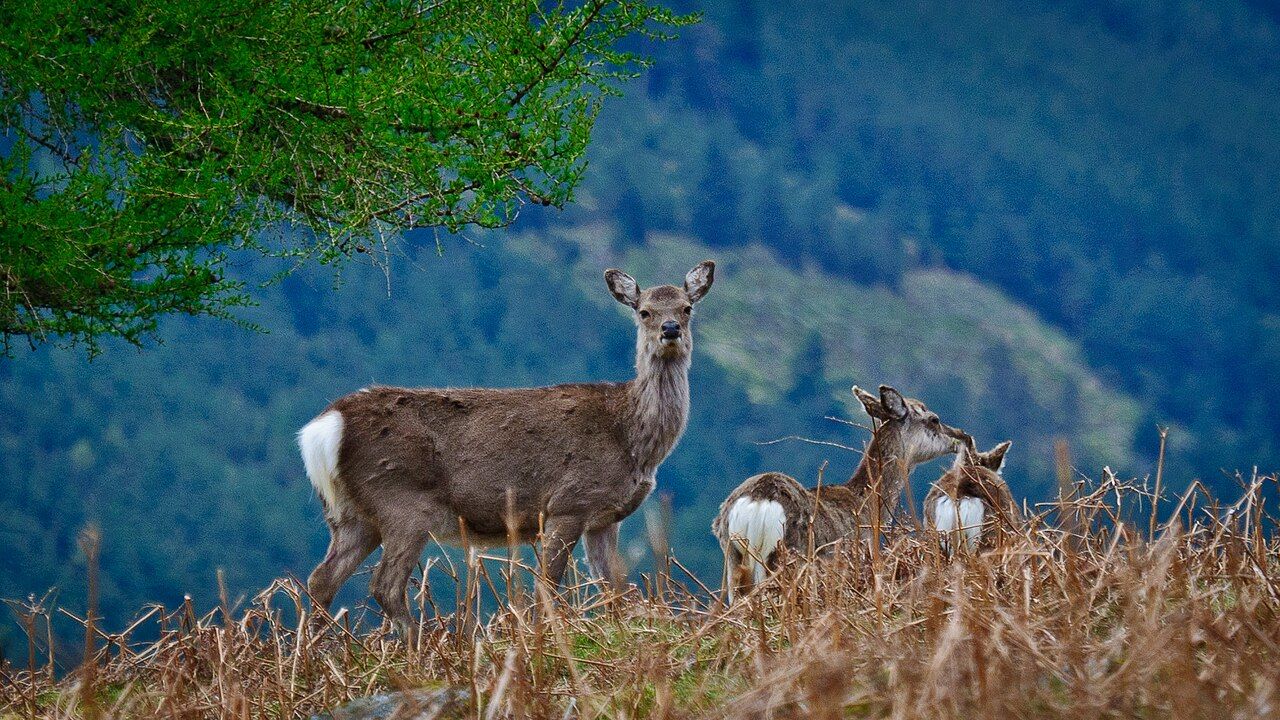
Sika deer on the Wicklow hills
A history carried across the Wicklow Mountains: sika from Japan, red deer and hybrids, and the high whistle of the autumn rut.
Wicklow Mountains
1860 is where I begin: sika deer were brought to Ireland from Japan, to Powerscourt. Some escaped, then spread across the Wicklow Mountains. The story is short in its first telling, but it has left a lasting mark on the hills.
Most deer in Wicklow are sika or hybrids, because sika have bred with native red deer. I like a landscape that keeps its histories in the living present; here, even the word “deer” holds more than one inheritance.
The hills are where they graze, and the forests are where they shelter. I picture the open ground and the cover together, a simple account of where these animals feed and rest.
Turn to 1798 in the Wicklow hills
In autumn, during the rut, the stags make a high whistling call. That detail changes the way I think about the hills: not as a quiet backdrop, but as a place where an animal’s presence can be heard as well as seen. The call is striking even in a sentence.
I find the history of the deer as compelling as the view implied by their range. The Wicklow Mountains are not just a setting for a familiar animal; the sika’s arrival and spread have shaped what most deer here are now. I return to that fact whenever I think of Wicklow on screen.
There is a harder part to this story. Large numbers of deer damage young trees. I cannot treat that as a small footnote beside the appeal of seeing deer on the hills; both facts belong to the same landscape, and neither cancels the other.
Even Laragh the crossroads below the glen belongs, in my mind, to a wider Wicklow story, one that keeps drawing attention back to the hills and forests. The sika arrived from far away, but their place here is now plain. What else might the hills hold in a sound I have not yet heard?